-
The Legacy That Inspires the Future


-
The Legacy That Inspires the Future

-
140 Years of Japanese Immigration to Argentina
From October 4th
Research and texts: Cecilia Onaha and Marcelo Huernos

-
Presentation
Preserving memory, honoring roots, and looking toward the future are the principles that guide this exhibition. The Japanese community has a strong presence in Argentina’s social landscape, and its members have carried out numerous activities over the years that have become highly visible in the everyday life of Argentinians. For this reason, its institutions, together with MUNTREF, undertook this project with the broad participation of members of the community.
This collective effort brings together documents, photographs, videos, and objects in the museum, offering visitors an opportunity to discover a history that remains little known to the general public and to understand what it meant for so many people to leave behind a country, a language, and a culture so distant from Argentina. The exhibition is organized around the challenges, experiences, and circumstances faced by those who had to navigate the process of migration, settlement, and integration into a new environment without relinquishing their identity.
The map that welcomes visitors provides a sense of what traveling entailed during the era of mass migration, when journeys were made aboard transatlantic steamships and ships had to call at numerous ports before reaching their final destination. It also traces the routes taken by those who arrived in Argentina after a second migration from other South American countries.
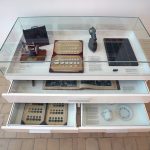
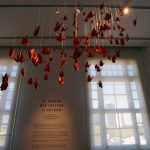
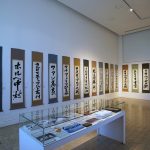
Kimonos and Hinamatsuri doll sets, depicting the imperial court arranged on a tiered platform, are among the objects that accompanied families on these journeys. They are displayed alongside 17 Japanese calligraphic works bearing the names of members of the community who were forcibly disappeared during Argentina’s last military dictatorship, as well as documents belonging to those who served in the Malvinas War.
The Japanese Garden in the city of Buenos Aires occupies a prominent place as one of the most significant contributions the community has made to the country. This particularly cherished project can be viewed in relation to the monuments donated by various immigrant communities during the centenary celebrations of Argentina’s independence. Institutions, schools, sports, businesses, and media outlets established in their adopted homeland are also represented through objects, photographs, and videos.
The exhibition texts guide visitors through the different stages of the integration process, while the captions provide context for the objects and images on display. In this way, the exhibition offers an approach to understanding the significance of Japanese immigration and the many ways in which Japanese culture continues to shape Argentina in the twenty-first century.
Research and texts: Cecilia Onaha and Marcelo Huernos
-
Photo Gallery
-
- El legado que inspira el futuro
-

- El legado que inspira el futuro
-

- El legado que inspira el futuro
-
- El legado que inspira el futuro
-

- El legado que inspira el futuro
-

- El legado que inspira el futuro
-
- El legado que inspira el futuro
-

- El legado que inspira el futuro
-

- El legado que inspira el futuro
-

- El legado que inspira el futuro
-

Venue
Museum of Immigration
-

-
- All rights reserved. 2026


