-
Instructions for Sparking a Dialogue


-
Instructions for Sparking a Dialogue

-
From October 4th
Artist: Jaime de los Ríos
Curators: Helga Massetani / Diana Wechsler

-
Bitamine 10 years
Buenos Aires. Urban Ecologies, a project by Mikel Otxoteko, and Instructions for Sparking a Dialogue, by Jaime de los Ríos, are part of this year’s 10th EAS-EZE edition of BITAMINE. For the first time, MUNTREF is presenting two of the proposals selected through the 2026 competition.
Both exhibitions engage in dialogue with one another and with the issues surrounding historical and contemporary migratory flows, whose traces are embedded in the former Immigrant Hotel building. They are part of BITAMINE’s EAS-EZE program for the internationalization of Basque Country artists, promoted by BITAMINE, Etxepare Euskal Institutua, and MUNTREF.
In Mikel Otxoteko’s project, the migratory layers inscribed in Buenos Aires’ urban memory guide the identification of five “engines of urban transformation: survival, valorization, exclusivity, regulation, and preservation.” Each, he explains, “expresses a different logic of territorial production: ensuring life, extracting value from land, producing distinction, organizing and controlling territory, or sustaining ways of life, relationships, and a sense of belonging.” Through their interaction, these forces contribute to the production of an unstable urban configuration. Using an open, dynamic, ever-changing map of Buenos Aires, visitors can intervene in these different dynamics, allowing “multiple cities” to emerge through interaction.
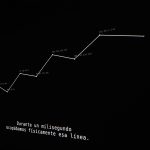
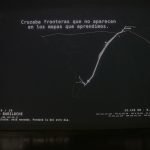
Jaime de los Ríos, in turn, offers another cartography, which he describes as “the largest sculpture ever built, and also the most ephemeral.” His work explores the possibility of recording the routes traced by a series of electronic dialogues between two people located at distant points on the planet: “Donostia, Vienna, Riyadh, Sydney.
One night, the connection was never completed. On another, for the first and only time, it was she who initiated the route.
The piece does not resolve the story: it leaves it burning, awaiting the next message.”
Helga Massetani / Diana Wechsler
-
Curatorial text
Two people who have never met arrange a meeting by message. Each one accesses a website from their respective city: one clicks “I am the origin,” the other “I am the destination.” In real time, the server traces the actual route taken by the data between the two addresses: the cables, nodes, and countries crossed by the connection. It then transforms this route into a line of light on a map. That line is the sculpture. It lasts only as long as the connection itself: a few tenths of a second.
The network that makes this encounter possible is not a cloud. It consists of fiber-optic cables laid across the ocean floor, owned by a handful of telecommunications operators and by the same major technology companies that today control a substantial part of this infrastructure. Many of these routes follow, with surprising precision, maritime corridors established centuries ago. The work makes visible an architecture we take for granted as invisible: the largest sculpture ever built, and also the most ephemeral.
The video documents twenty of these encounters between the same two people, connected on twenty separate occasions over several months from different cities: Donostia, Vienna, Riyadh, and Sydney. One night, the connection was never completed. On another, for the first and only time, it was she who initiated the route. The work does not resolve the story: it leaves it burning, awaiting the next message.
Latency is not a delay. It is the time it takes for a relationship to come into being.
-
Photo Gallery
-

Venue
Center of Contemporary Art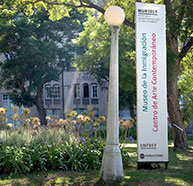
-

-
- All rights reserved. 2026


