-
Buenos Aires. Urban Ecologies


-
Buenos Aires. Urban Ecologies

-
Buenos Aires. Urban Ecologies
From October 4th
Artist: Mikel OtxotekoCurated by: Helga Massetani / Diana Wechsler

-
Bitamine 10 years
Buenos Aires. Urban Ecologies, a project by Mikel Otxoteko, and Instructions for Lighting a Dialogue, by Jaime de los Ríos, make up this year’s 10th edition of EAS-EZE by BITAMINE. For the first time, MUNTREF is exhibiting two of the proposals selected in the 2026 competition.
Both exhibitions, in dialogue with each other and with the issues of historical and contemporary migration flows imprinted on the old Hotel de Inmigrantes building, are part of the EAS-EZE program for the internationalization of Basque artists, promoted by BITAMINE, Etxepare Euskal Institutua and MUNTREF.
In Mikel Otxoteko’s piece, the migratory layers imprinted on Buenos Aires’ urban memory guide the identification of five “engines of urban transformation: survival, valorization, exclusivity, regulation and preservation,” understanding that “each one expresses a different logic of territorial production: guaranteeing life, extracting value from land, producing distinction, ordering and controlling the territory, or sustaining ways of life, bonds and belonging.” Through their interaction, all of these contribute to producing an unstable urban configuration. Through an open, dynamic, ever-changing map of Buenos Aires, visitors can intervene in the different dynamics, giving rise to the emergence of “multiple cities” out of their interaction.
Jaime de los Ríos, for his part, offers another cartography, which he describes as “the largest sculpture ever built, and also the most ephemeral,” as his work explores the possibility of recording the routes of a series of electronic dialogues between two people in distant positions on the planet: “Donostia, Vienna, Riyadh, Sydney. One night the connection was never completed. On another, for the first and only time, she was the one who initiated the route. The piece does not resolve the story: it leaves it lit, waiting for the next message.”
Helga Massetani / Diana Wechsler
-
Curatorial text
Buenos Aires is a city shaped by successive waves of migration. To the Italian, Galician, Basque and other communities that historically gave form to its neighborhoods, new migrations are now being added, including those from Paraguay, Bolivia and Peru. Various forces of transformation currently act upon this layered territory: real estate pressure, gentrification and touristification, the demolition of historic buildings and the construction of towers, the transformation of commerce and services, and forms of regulation and control of public space. In response to these processes, neighborhood resistance, community networks and movements to defend heritage and local ways of life are emerging.
The project identifies five engines of urban transformation: survival, valorization, exclusivity, regulation and preservation. Each one expresses a different logic of territorial production: guaranteeing life, extracting value from land, producing distinction, ordering and controlling the territory, or sustaining ways of life, bonds and belonging.
-
Photo Gallery
-



Venue
Center of Contemporary Art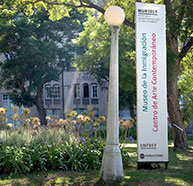
-

-
- All rights reserved. 2026


